
Smart Toilet vs Regular Toilet: The Honest 2026 Breakdown
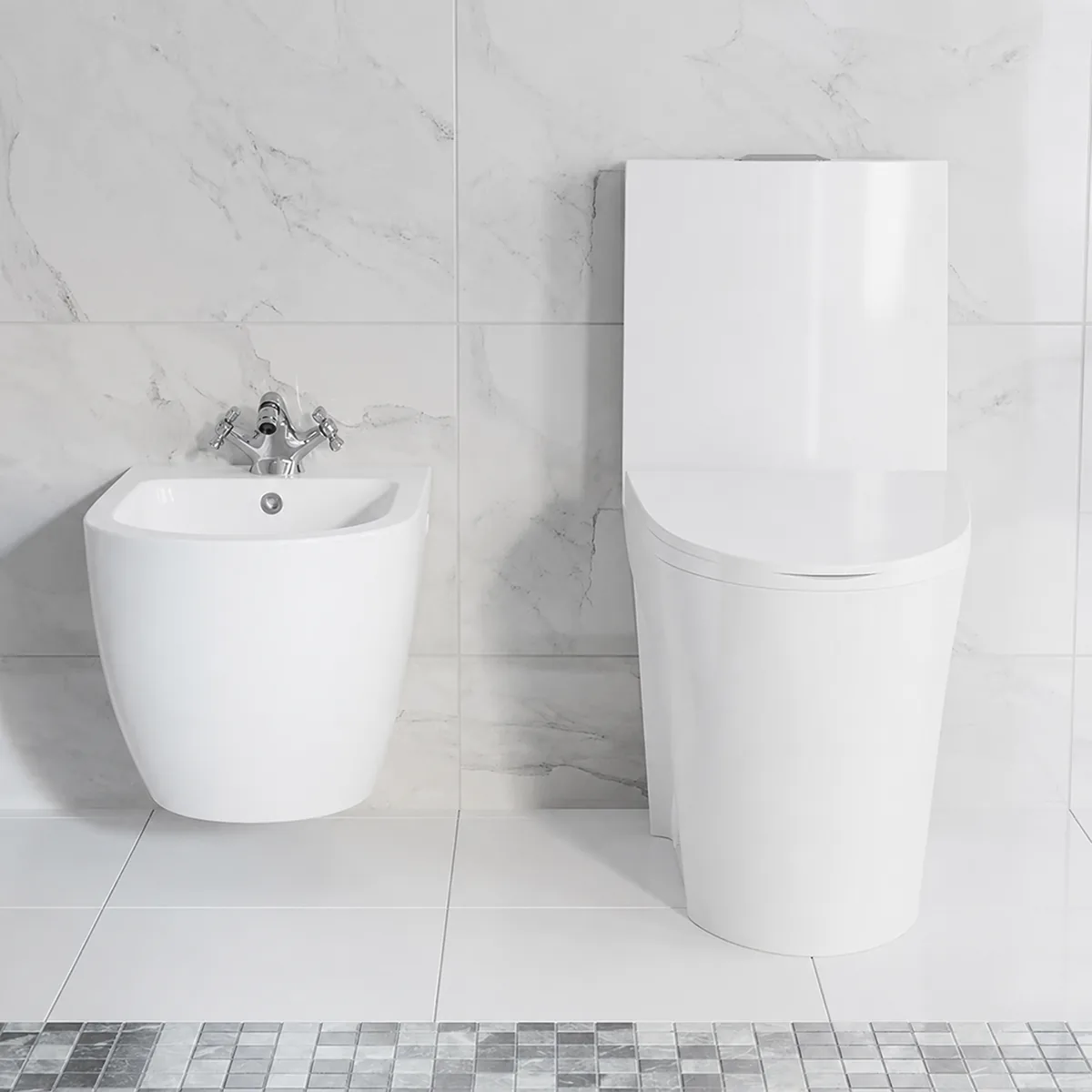
The two-second answer
A regular toilet flushes. A smart toilet automatically opens its lid as you walk in, warms the seat to the temperature you like, washes you with a heated bidet stream, dries you with warm air, self-cleans its own nozzle, deodorizes the bowl, lowers a soft-close lid behind you, and flushes itself. After two weeks with one, the porcelain bowl in your guest bathroom will feel like it belongs in a museum.
1. Comfort & hygiene
A heated seat sounds like a small thing until you've sat on one at 5:30am in a cold Coral Gables marble bathroom. The temperature is adjustable — most owners set it to a mild 95–98°F. Combined with a warm-water bidet wash, you also use 80–90% less toilet paper. That's better for skin, better for plumbing, and (over a year) noticeably cheaper.
2. Cleanliness
Regular toilets are passive — anything that ends up on the bowl, stays there until you scrub it. FlowLux smart toilets coat the bowl with an electrolyzed pre-mist before every use, then auto-flush with a strong dual-flow system, then run a UV nozzle self-clean cycle after each wash. The result is a bowl that's measurably cleaner with zero manual brushing for weeks at a time.
3. Accessibility
Foot-sensor flushing, auto open/close lids, heated seats, and bidet wash + warm-air dryer make smart toilets one of the highest-value upgrades for elderly homeowners or anyone with limited mobility. We've installed dozens of FlowLux units across South Florida specifically because an adult child wanted to make a parent's master bathroom more independent.
4. Aesthetics & resale
One-piece smart toilets like the FlowLux Halo or Nova have a sculptural, tankless silhouette that traditional two-piece toilets can't match. Wall-hung models like the Lunar create a floating effect that's incredibly modern. Both are increasingly common requests in Miami-Beach and Boca-Raton resales.
5. The downsides — honestly
Smart toilets need a 110V GFCI outlet within 4 feet. If your bathroom doesn't have one, plan on 1–2 hours of electrician time. They're also a larger upfront cost than a $200 builder-grade toilet — though FlowLux pricing starts at $96 for bidet attachments and most full smart toilets sit between $400–$900. Finally, they require slightly more cleaning of the seat hinges every few months. None of that is a dealbreaker — it's just what we'd want you to know before buying.
Bottom line
If you spend even five minutes a day in a bathroom, a smart toilet pays back in joy per dollar faster than almost any home upgrade. If you're comparing FlowLux to Toto, Kohler, or Brondell at 4–8× the price for the same feature set, FlowLux is what we'd buy.